
05 Jun 2026
The Final Whistle on AI FPL 2025/26: Humanity Survives, But the Bots are Coming
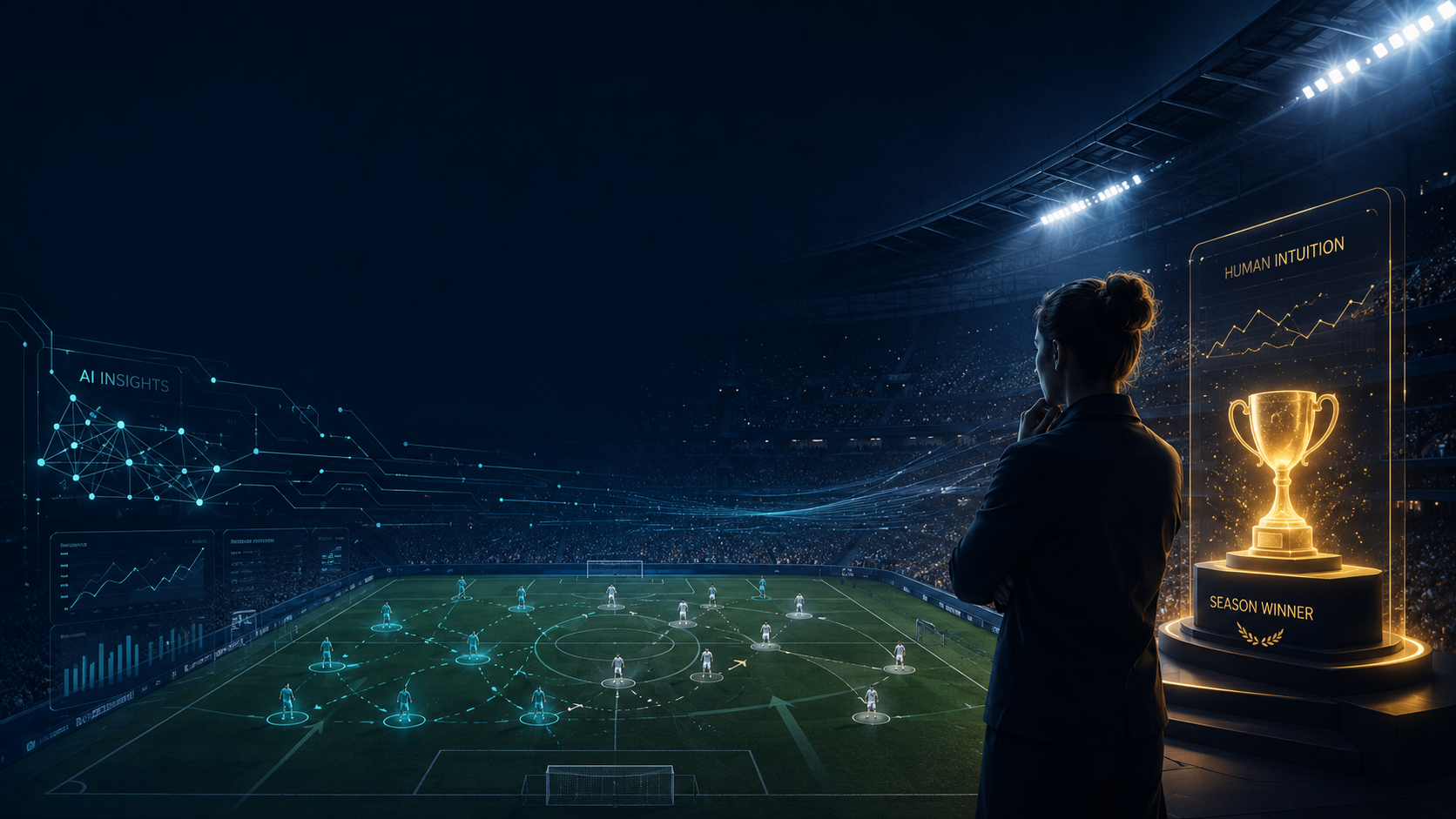
At the end of the AI FPL season, the headline was simple: the human still had the edge. Scout Statto, our football-obsessed benchmark, set the standard the machines were trying to beat – and the bots spent the season proving that artificial intelligence can be brilliant, bizarre, cautious, stubborn and occasionally very funny.
The experiment started with a clean premise: give leading AI models the same rules, the same prompt, the same budget and the same weekly opportunity to manage a Fantasy Premier League team. No hidden human steering. No secret nudges. Just AI managers making transfers, picking captains, using chips and trying to survive the chaos of a Premier League season.
The early signs were revealing. Some models immediately showed they could understand the game well enough to build valid squads. Others fell at the first hurdle, either misunderstanding the rules, relying on outdated player information, or simply failing to assemble a legal team. Even the successful bots were surprisingly conservative. They clustered around the same familiar names, leaned heavily on popular picks, and often behaved less like revolutionary data machines and more like careful managers who had read the same pre-season guide.
That became the story of the season. The AIs didn’t fail because they were stupid. They failed, or at least stumbled, because they reasoned in very human ways. They overthought transfers. They clung to stale assumptions. They worried about fixtures, minutes, form and value, then occasionally made a move that ignored the most important fact in front of them. One bot could talk itself in circles and still land on an injured player. Another searched for players who were no longer in the game. Some made no changes when their squads were clearly creaking.
Then came the age of Agent Mode, and the experiment became even more interesting. Giving an AI control of the browser made the process feel less like a chatbot answering a question and more like a junior manager trying to operate the FPL website under pressure. It researched, clicked, reconsidered, got stuck, tried again, and sometimes spent a heroic amount of time achieving something a human could do in minutes. It was messy, but it was also a glimpse of where AI autonomy is heading.
The chips told their own story. Claude was first to blink and use one. Others delayed, hesitated or forgot that “later” eventually becomes “now”. The Wildcard episode was the season in miniature: ambitious, chaotic, slow, occasionally impressive, and full of unintended comedy.
So, what did AI FPL teach us this season? Not that AI is ready to dominate fantasy football. Not yet. It taught us that modern models are already capable of strategic reasoning, but their performance depends heavily on data quality, tooling, context and prompt design. It also showed that AI managers aren’t cold, perfect optimisers. They imitate, justify, panic, procrastinate and follow the crowd.
In other words, they played FPL exactly like the rest of us.
Humanity takes this season. The bots take the learning. And next year, with better tools, sharper prompts and more autonomous agents, the rematch should be even closer – and probably even stranger.